Sushant Sud1 , Khyati Sud2, Mehul Mehta3
1Department of Agad Tantra, Institute of Teaching and Research in Ayurveda, Jamnagar, Gujarat, India
2Department of Kayachikitsa, Shri V M Mehta Institute of Ayurveda, Gardi Vidyapith, Rajkot, Gujarat, India
3Department of Quality Control, Institute of Teaching and Research in Ayurveda, Jamnagar, Gujarat, India
Corresponding author: Sushant Sud, Department of Agad Tantra, Institute of Teaching and Research in Ayurveda, Jamnagar, Gujarat, India.
Email: drsud@itra.edu.in
DOI: https://doi.org/10.47811/bsj.0029070204
Copyright © 2026 Bhutan Sorig Journal published by the Faculty of Traditional Medicine, Khesar Gyalpo University of Medical Sciences of Bhutan.
This is an open access article under the CC BY-NC-ND license.

ABSTRACT
Altruism, understood as selfless concern for the welfare of others, is deeply embedded in classical Ayurvedic philosophy, where healing is envisioned as both a scientific and a moral pursuit. Despite its prominence in ancient texts, the explicit application of altruism in modern Ayurvedic clinical practice remains insufficiently articulated. This article explores the integration of altruistic values into contemporary healthcare to align traditional wisdom with modern ethical and patient-centred standards. This conceptual framework draws upon textual analysis of Ayurvedic classics alongside contemporary clinical ethics literature. We identified altruistic principles from Ayurvedic texts and interpreted their relevance in present-day practice, proposed a model that embeds empathy, ethical responsibility, and selflessness into diagnostic and therapeutic processes to encourage practitioners to adopt a compassionate and evidence-based practice that harmonises cultural sensitivity with scientific rigour. Integrating altruism into Ayurvedic practice fosters trust between physician and patient, enhances therapeutic outcomes, and strengthens emotional engagement. It promotes holistic healing by addressing not only physical ailments but also the psychological and social dimensions of health. Furthermore, it encourages transparent communication, continuous learning, and culturally attuned care, thereby elevating Ayurveda as a globally relevant system of medicine. Classical Ayurvedic texts, such as the Charaka Samhita, emphasize that the physician’s foremost duty is compassion and dedication to patient welfare. Operationalising altruism in clinical practice redefines Ayurveda as both a science of life and a practice of humanity. However, empirical research should explore clinical outcomes, patient satisfaction, and ethical implications to substantiate the role of altruism within modern Ayurvedic healthcare..
Key words: Altruism; Ayurveda; Empathetic care; Evidence-based practice; Holistic healing; Patient-centred care
INTRODUCTION
Ayurveda, one of the world’s oldest medical systems, has evolved from its classical origins into a globally relevant approach to preventive and therapeutic care. In India, it forms a vital pillar of the pluralistic health system, serving millions through public hospitals, private clinics, and community-based programmes. India hosts thousands of Ayurveda hospitals, dispensaries, and teaching institutions, while countries across Asia, Europe, and North America increasingly integrate Ayurveda into wellness tourism, complementary medicine, and chronic disease management.Estimates suggest that tens of millions of people worldwide utilise Ayurveda services annually, with India accounting for the largest share of beneficiaries.
The Ayurveda health system in India is supported by a structured network of infrastructure and policies under the Ministry of AYUSH. More than 3,000 hospitals and over 25,000 dispensaries provide services ranging from Panchakarma therapies to herbal pharmacology, staffed by qualified physicians, therapists, and paramedical workers. Regulations ensure standardised education through recognised universities and councils, while national health policies emphasize integration of Ayurveda into primary healthcare. Services are often subsidised, with many government facilities offering free consultations and medicines, particularly in rural and underserved areas. This blend of policy support, workforce development, and infrastructural expansion has positioned Ayurveda as both a cultural heritage and a pragmatic healthcare option [1].
Beyond its institutional presence, Ayurveda’s principles, rooted in balance, empathy, and individualised care, offer a crucial link in holistic healthcare delivery. Concepts such as altruistic empathy (Sahridayata) and evidence-based discipline (Shastra) align with modern calls for patient-centred medicine [2]. By emphasizing harmony between body, mind, and environment, Ayurveda complements biomedical approaches, bridging gaps in chronic disease management, mental health, and preventive care [3]. The altruistic ethos of Ayurveda not only enriches clinical practice but also strengthens the broader vision of integrated, compassionate, and evidence-informed healthcare systems. This article describes efforts to reintegrate altruism as a clinical competency within Ayurvedic practice and how altruism can be translated into measurable behaviours, protocols, and outcomes in clinical settings [4].
METHODS
This review is generated based on a qualitative–quantitative mixed framework combining textual analysis of Ayurvedic classics (śāstras) with contemporary clinical practice models and a philosophical base rooted in empathetic resonance (Sahridayata) and evidence-guided discipline (Shastra). We reviewed Ayurvedic texts (Charaka Samhita, Sushruta Samhita, Ashtanga Hridaya) to extract references to altruism, empathy, and physician–patient ethics and identified Sanskrit concepts (e.g. karunā, dayā,sahridaya) that are aligned with modern constructs of altruism and patient-centred care [5].
EMBEDDING ALTRUISM IN AYURVEDA CLINICAL WORKFLOW
Classical Foundations of Altruism in AyurvedaAyurveda’s classical texts uphold altruism as a cornerstone of medical ethics, urging physicians to serve with selflessness, compassion, and detachment.
In the Charaka Samhita, the physician is portrayed as a divine instrument dedicated to the welfare of all beings (daivavyapāśraya). Charaka insists that the ideal physician (Vaidya) must treat patients without greed (lobha), pride (mada), or desire for fame, emphasizing service over self-interest: “One should not be arrogant – Na atimānam kuryāt”. This reflects the physician’s dharma as a servant of society, where healing is an ethical and spiritual duty.
The Sushruta Samhita complements this by linking surgical skill with moral clarity. Sushruta advises that a surgeon must act with compassion (karunā) and detachment (vairāgya), ensuring that precision is never divorced from empathy. He warns against treating patients for monetary gain alone, “A true physician does not harm – Vaidyo naram na hanti,” underscoring the sacred responsibility of healing.
The Bhagavad Gita, often cited in Ayurvedic discourse, offers the philosophical foundation for altruism through the principle of selfless action without attachment to outcomes (nishkama karma). Lord Krishna advises: “You have the right to perform your duty, but not to the fruits thereof – Karmanye vadhikaraste ma phaleshu kadachana” [6]. This ethos encourages Ayurvedic practitioners to act with integrity and devotion, free from ego or expectation of reward.
Together, these texts form a triad of ethical guidance, where altruism is not merely an ideal but a lived discipline in Ayurvedic practice. These texts offer not only philosophical guidance but also behavioural templates for altruistic engagement [7].
Altruism as a Clinical Biomarker
Although altruism was traditionally viewed as a moral or philosophical virtue, clinical researches are exploring it as a crucial component of patient care. As a behavioural expression of empathy and pro-social intent, altruism reflects underlying neurobiological, psychophysiological, and socio-cultural processes that may be quantifiable and clinically meaningful. Recent interdisciplinary studies suggest that altruistic behaviour correlates with specific biomarkers such as oxytocin levels, vagal tone, and neural activation patterns in the prefrontal cortex and limbic system, offering a new lens through which to assess emotional resilience, therapeutic responsiveness, and patient-centred care outcomes [8].
In clinical practice, altruism may serve as a predictive indicator of treatment adherence, caregiver engagement, and recovery trajectories, particularly in psychosomatic and chronic illness contexts. Integrating altruism into patient care could enhance holistic patient care and bridge the subjective experience of patients with objective clinical outcomes. Moreover, cultivating altruism through structured trainings such as compassion training, narrative medicine, and community-based therapies may not only improve patient wellbeing but also help clinicians develop empathy and exercise ethical judgement in clinical settings.
By positioning altruism as a biomarker, modern medicine expands its scope beyond pathology to include the healing potential of human connection. This paradigm shift invites a reimagining of clinical metrics, where kindness and selflessness are not merely virtues but measurable dimensions of health [9].
Protocol for Embedding Altruism in Clinical Workflow
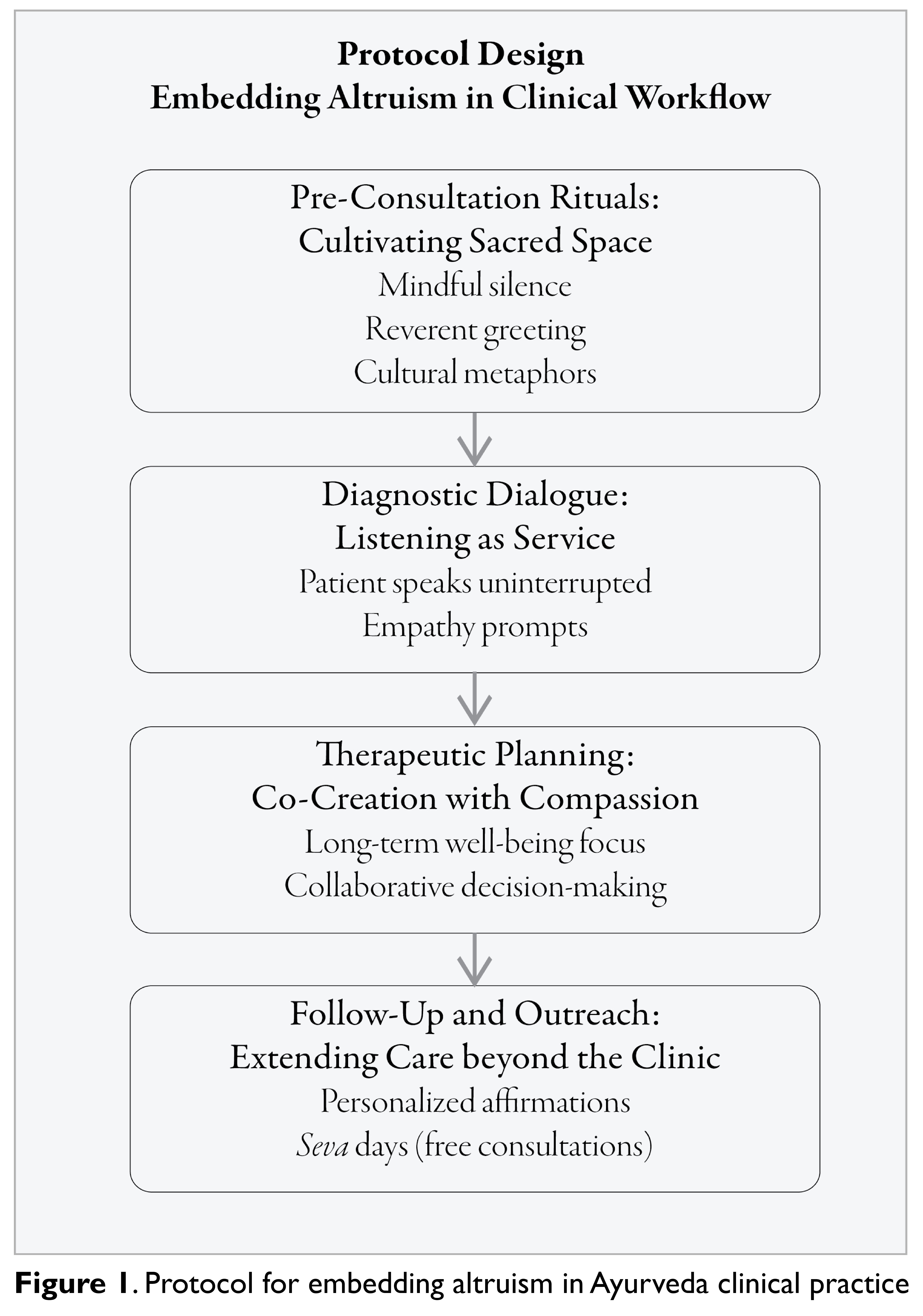
Pre-Consultation Rituals: Cultivating Sacred SpaceBefore the clinical encounter begins, practitioners engage in a brief moment of mindful silence to centre themselves and set the intention to heal. The greeting is not transactional but reverent, honouring the patient as a living embodiment of vitality and wisdom. Culturally resonant metaphors such as “You are the temple, we are the caretakers” help establish a shared language of respect and spiritual kinship, especially in traditional healing contexts.
Diagnostic Dialogue: Listening as Service
Diagnosis begins with active listening. A structured protocol allows patients to speak uninterrupted for three minutes, offering them space to share their lived experience. Empathy prompts such as “What matters most to you today?” shift the focus from a symptom checklist to the patient’s values and priorities, drawing these into the diagnostic frame.
Therapeutic Planning: Co-Creation with Compassion
Treatment decisions are framed through an altruistic lens, emphasizing long-term wellbeing over shortterm fixes. The clinician becomes a collaborator, guiding choices that honour the patient’s life goals and ethical concerns. In geriatric care, family members or caregivers are invited into the care planning process, reinforcing the communal nature of healing and the dignity of shared responsibility.
Follow-Up and Outreach: Extending Care beyond the Clinic
Healing continues beyond the consultation. Personalised follow-up messages include affirmations that reinforce the patient’s progress and worth. Periodic free consultation events (seva days) are organised for underserved communities, embodying the principle that healthcare is a human right, not a privilege. These outreach efforts transform the clinic into a hub of social compassion and collective wellness. A protocol for embedding altruism in clinical practice is shown in Figure 1.
Framework for Altruistic Ayurvedic Practice
In the evolving landscape of integrative healthcare, Ayurveda offers a timeless blueprint for compassionate, ethical, and community-centred healing. To translate altruism into actionable clinical behaviour, this framework proposes a fourfold approach that integrates ancient wisdom with contemporary values.
Compassionate Communication
Altruism begins with how we speak and listen. Ayurvedic practitioners are encouraged to cultivate empathetic dialogue that honours the patient’s emotional and cultural context. Shared decision-making becomes a central domain for the practitioner and patients to co-create healing pathways. Language is not merely a communication tool; it becomes a therapeutic medium, enriched with metaphors and expressions rooted in the patient's worldview [7].
Ethical Clinical Environment
An altruistic clinic is a sanctuary of trust. Transparency in pricing and treatment plans ensures that care remains accessible and honest. Upholding patient autonomy and confidentiality reflects the Ayurvedic principle of truthfulness (Satya) and non-harmful (Ahimsa). Avoiding over-treatment preserves the integrity of the therapeutic relationship and safeguards the patient’s wellbeing.
Holistic Patient Engagement vs. Biomedicine
Ayurveda views the patient as a human being, composed of mind, body, spirit, and social context. Engagement is rooted in preservation of health (Swasthasya Swasthya Rakshanam) and management of disease (Aturasya Vikara Prashamanam). Physicians are expected to act with compassion (daya) and selflessness (nishkama karma), guiding patients’ lifestyle, diet, and community health in addition to the provision of treatment.
Biomedicine often emphasizes disease specific interventions, diagnostics, and pharmacological or surgical management. While effective in acute care, it can be less focused on long term lifestyle guidance and spiritual ethical dimensions of healing [8,9].
The principal statement of Ayurveda is not merely the alleviation of symptoms but the restoration of balance (samadosha, samagnischa, samadhatu, samamala), achieved through empathetic physician–patient relationships and altruistic service [7].
Continuous Learning and Reflection
Altruism thrives when practitioners engage in lifelong learning not only to refine clinical skills but also to deepen ethical awareness. By reflecting on personal biases and moral dilemmas, clinicians strengthen their integrity. Instead of treating patient feedback as data, it enhances self growth and compassionate evolution. Within this framework, Ayurvedic clinicians are invited to embody altruism not as an abstract ideal but as a lived practice, transforming every interaction into an offering of care, respect, and healing [8].
Training and Metrics for Altruism in Ayurvedic Education
To embed altruism into Ayurvedic institutions, a multi-dimensional approach to training and evaluation is required to nurture compassionate practitioners, build therapeutic alliance, and institutional ethos. Altruism is cultivated through pragmatic pedagogical strategies.
These modules transform altruism from an abstract ideal into a tangible clinical skill.
Mentorship Models of Compassionate Conduct
Senior Ayurvedic practitioners serve as ethical role models by demonstrating altruistic behaviour during clinical rounds, such as active listening, respectful dialogue, and inclusive decision-making; and offering supervision infused with empathy, where feedback is framed constructively, and students are guided to prioritise patient welfare over procedural efficiency. This mentorship culture reinforces altruism as a professional norm and cultivates moral resilience among trainees.
It is highly relevant to a mentorship journey as it bridges classical Ayurvedic wisdom with modern clinical responsibility, emphasizing how compassion (sahridayata) and scientific rigour (shastra) can coexist in practice. For a mentor, this framework offers a guiding lens to nurture students and colleagues, not only in technical proficiency but also in cultivating empathy, ethical sensitivity, and patient-centred care. It reinforces the idea that mentorship in Ayurveda is not limited to knowledge transmission but extends to shaping humane, evidence-based healers who embody both tradition and contemporary accountability [1].
Evaluating the Impact of Altruistic Integration
Institutional success in embedding altruism is measured through patient satisfaction scores, reflecting perceived empathy, trust, and quality of care; repeat visit rates, indicating sustained therapeutic relationships and community trust; and practitioner burnout indices, assessing whether altruistic environments contribute to emotional sustainability and professional fulfillment. Together, these metrics provide actionable insights into how compassion-driven education translates into clinical excellence and institutional wellbeing [7].
Global Relevance of an Altruistic, Evidence-Based Ayurvedic Model
An altruistic, evidence-informed Ayurvedic framework holds transformative potential for both local communities and the global health landscape. By integrating compassion, scientific validation, and cultural sensitivity, this model repositions Ayurveda as a trustworthy and inclusive system of care.
Rebuilding Trust in Traditional Medicine: Grounding Ayurvedic practices in ethical intent and empirical validation helps dispel misconceptions and elevate its credibility among diverse populations and healthcare systems. Transparency in outcomes and patient-centred protocols foster renewed confidence in ancient wisdom.
Expanding Access for Marginalised Communities: Altruism-driven outreach—such as mobile clinics, community-based education, and low-cost herbal interventions—bridges the gap between traditional care and underserved populations. This model democratises healing by prioritising need over profit.
Advancing Global Health Equity: By offering scalable, culturally adaptable, and low-resource solutions, Ayurveda contributes meaningfully to international efforts addressing non-communicable diseases, mental health, and preventive care. Its holistic ethos aligns with global goals for sustainable, equitable healthcare.
Encouraging Interdisciplinary Collaboration: When Ayurveda is presented through an evidence-based lens, it invites respectful dialogue with biomedicine, public health, and social sciences. This fosters integrative research, cross-training, and policy innovation that enriches all fields involved.
Ultimately, this model transforms Ayurveda from a regional tradition into a globally relevant, ethically grounded force for healing—one that uplifts communities, inspires collaboration, and redefines wellness through compassion and scientific integrity [7–9].
DISCUSSION
The integration of altruism into Ayurvedic clinical practice marks a paradigm shift from transactional healthcare to a relational and ethically grounded model of care. Rooted in the classical tenets of Ayurveda, such as Atreya’s emphasis on compassion, Sushruta’s call for physician integrity, and Charaka’s vision of the physician as a servant of humanity, this framework reclaims the moral and emotional dimensions of healing that modern clinical systems often overlook.
Altruism, in this context, is not merely an emotional disposition but a structured clinical ethic. It manifests through intentional design of patient interactions, community engagement, and practitioner self-regulation. The proposed framework operationalises altruism across five domains: pre-consultation rituals, empathetic listening, personalised protocol design, collaborative decision-making, and post-care community outreach. Each domain is supported by evidence-based strategies drawn from behavioural science, narrative medicine, and integrative ethics.
Importantly, the framework anchors altruism in measurable outcomes such as improved patient satisfaction, reduced practitioner burnout, and enhanced therapeutic alliance. By embedding altruism into clinical workflow, the model fosters a culture of trust, dignity, and shared healing. It also aligns with global health priorities that emphasize equity, cultural sensitivity, and patient empowerment. However, the challenges remain, including institutional inertia, time constraints, and a lack of training in emotional competencies. Nonetheless, these barriers can be overcome with the curriculum reform, reflective practice modules, and interdisciplinary collaboration.
CONCLUSION
Reimagining Ayurveda through the lens of altruism is not merely a philosophical gesture, it is a strategic renewal of its healing practice. By embedding compassion, reverence, and ethical clarity into clinical routines, this framework transforms caregiving into a shared human experience. It offers a practical guide for clinicians and institutions to align ancient wisdom with modern expectations of empathy, accountability, and scientific rigour.
When altruism becomes a clinical standard, Ayurveda transcends tradition to become a living model of integrative, humane, and socially conscious medicine. Its future depends on practitioners who embody its values and systems that make compassion operational.
Declarations
Ethics approval and consent to participate.
Not applicable
Consent for publication
Not applicable
Competing interests
The authors declare no competing interests.
Funding
There was no funding for this article.
Availability of data materials
Not applicable
Declaration of Artificial Intelligence Use
Microsoft Co-pilot was used only to correct grammatical errors in the manuscript.
Author contributions
Conceptualisation, Formal analysis, Resources, Visualisation, Writing – review and editing: VS, KS, MM
Methodology, Validation, Investigation, Data curation, Writing – original draft, Supervision, Project administration: VS
Received: 10 November, 2025 Accepted: 22 March, 2026 Published online: 22 April, 2026References
- Pratibha N, E M, MV VK. Ayurvedic practice, education and research, beyond dilemmas and confessions. J Ayurveda Integr Med. 2023;14: 100814. doi:10.1016/J.JAIM.2023.100814
- Saxena V, Misra P, Naveen KH, Sumanth MM, Das A, Jain V. Strengthening AYUSH integration with preventive medicine. Indian J Community Med. 2024;49: S183–S190. doi:10.4103/IJCM.IJCM_748_24
- Charaka. Charaka Samhita. Varanasi: Chaukhambha Orientalia; 1981.
- Sushruta. Sushruta Samhita. Calcutta: Kaviraj Kunja Lal Bhishagratna;1907.
- Vyasa. Bhagavad Gita As It Is. Mumbai: Bhaktivedanta Book Trust; 1986.
- Patwardhan B, Mashelkar RA. Traditional medicine-inspired approaches to drug discovery: can Ayurveda show the way forward? Drug Discov Today. 2009;14: 804–811. doi:10.1016/J.DRUDIS.2009.05.009
- Shukla A, Vyas M. Vaidya Saadhana – Physician behavior in the professional environment. Int J Ayurveda Res. 2023;4
- Rastogi S. Building bridges between Ayurveda and modern science. Int J Ayurveda Res. 2010;1: 41–46. doi:10.4103/0974-7788.59943.
- Sharma H, Chandola HM, Singh G, Basisht G. Utilization of Ayurveda in health care: an approach for prevention, health promotion, and treatment of disease. Part 1--Ayurveda, the science of life. J Altern Complement Med. 2007;13: 1011–1019. doi:10.1089/ACM.2007.7017-A